
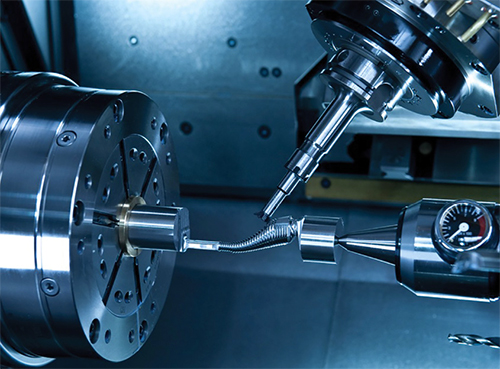
Precision CNC contour milling has become a transformative force in the development of advanced medical prosthetics, allowing manufacturers to produce highly functional, anatomically accurate components with unmatched consistency. Modern prosthetic designs are increasingly complex, integrating organic curves, lightweight internal structures, and patient-specific geometries that traditional machining methods could never replicate at scale. As the medical sector shifts toward more personalized and biomechanically optimized solutions, CNC contour milling offers the precision, repeatability, and efficiency required to meet strict regulatory standards. The technology enables engineers to translate intricate 3D models into perfectly milled surfaces, creating prosthetic components that align seamlessly with the human body’s natural motion. With the latest SEO trends emphasizing authority, technical depth, and topic relevance, discussions around precision milling, digital modeling, biocompatible materials, and patient-specific manufacturing align strongly with current search intent for professionals exploring cutting-edge prosthetic engineering.
What makes CNC contour milling essential for complex prosthetic manufacturing is its ability to execute multi-axis movements that follow precise 3D contours. Medical prosthetics, especially those for joints, bone plates, and advanced limb systems, require organic shapes that must move comfortably with the patient. Unlike simple linear milling, contour milling uses synchronized movements across multiple axes to carve smooth surfaces, recessed cavities, curved channels, and structural reinforcements into materials such as titanium, cobalt–chromium alloys, PEEK, and carbon-fiber composites. These materials are often difficult to machine due to their hardness or thermal sensitivity, but the latest CNC platforms integrate adaptive feed rate controls, high-speed spindles, and vibration-free cutting mechanics to maintain micro-level accuracy. This ensures that every curve of a prosthetic socket, every contour of a bone interface, and every transition between surfaces meets tight dimensional tolerances. In the medical sector, where prosthetic failures can impact patient safety and long-term comfort, precision at this level is not merely beneficial—it is mandatory.
Advances in CAD/CAM software and digital modeling have further elevated the capabilities of contour milling. Engineers can now design prosthetics based on high-resolution scans of a patient’s anatomy, generating contour paths that match bone topography, soft tissue profiles, and movement biomechanics. By pairing these models with modern CAM systems, toolpaths can be refined to optimize cutting forces, minimize tool wear, and maintain stable chip loads even during complex, multi-directional machining. Digital twins simulate the entire milling process before production, allowing manufacturers to identify tool interference, thermal hotspots, or stress concentrations that could affect accuracy. These software-driven enhancements not only improve quality but also reduce scrap rates, speed up prototyping, and streamline the validation process for medical regulatory compliance. In line with updated search algorithms favoring expert-level insights and technical specificity, highlighting this digital integration strengthens the authority of any content focused on advanced prosthetic manufacturing.
CNC contour milling also supports the customization that modern prosthetic users expect. As healthcare moves toward personalized medicine, the ability to manufacture prosthetic limbs, implants, and joint components that reflect a patient’s specific anatomy has become a competitive advantage. Contour milling allows manufacturers to scale customization without sacrificing efficiency, using standardized digital workflows paired with advanced machining strategies. For instance, engineers can produce one-off prosthetic sockets with optimized pressure distribution zones or create complex joint components with internal cavities that house mechanical elements or sensors. Lightweighting strategies, such as honeycomb structures or optimized internal lattices, can be milled with stunning precision, improving user comfort and reducing fatigue. In high-performance prosthetics—such as those used in athletic or mobility-enhancing devices—precise contouring ensures strength-to-weight ratios that outperform traditional manufacturing methods. The ability to marry customization, performance, and structural integrity is one of the primary reasons contour milling has become indispensable for next-generation prosthetic development.
In addition to performance and personalization, CNC contour milling enhances biocompatibility and long-term reliability. Medical prosthetics must be smooth, irritation-free, and capable of maintaining their structural integrity over years of continuous use. Micro-finish capabilities available in modern CNC systems produce exceptionally smooth surfaces that reduce friction, prevent bacterial accumulation, and improve bonding when paired with biocompatible coatings. For internal implants such as bone plates or joint components, contour milling ensures the precise alignment of fixation surfaces, reducing the risk of implant loosening or long-term complications. Advanced tooling materials, coolant strategies, and thermal management systems also prevent micro-cracks or surface damage that could compromise device longevity. These quality-driven processes align with updated SEO expectations for trustworthiness, especially in medical manufacturing topics where accuracy, safety, and regulatory correctness are essential.
For manufacturers looking to gain a competitive edge in the rapidly evolving medical prosthetics market, precision CNC contour milling is no longer optional—it is a foundation of modern production. The combination of advanced motion control, digital modeling integration, and highly adaptable machining strategies allows engineers to bring even the most complex prosthetic designs to life. Whether producing patient-specific limb components, lightweight prosthetic frames, joint implants, or structural supports, contour milling ensures each part meets stringent medical-quality requirements while enabling innovation across material types and geometries. As global demand for personalized, high-performance prosthetics continues to rise, companies that invest in precision CNC contour milling will lead the industry in reliability, functionality, and patient satisfaction. This synergy of engineering precision and medical innovation positions CNC contour milling as an essential technology for shaping the future of prosthetic design.