
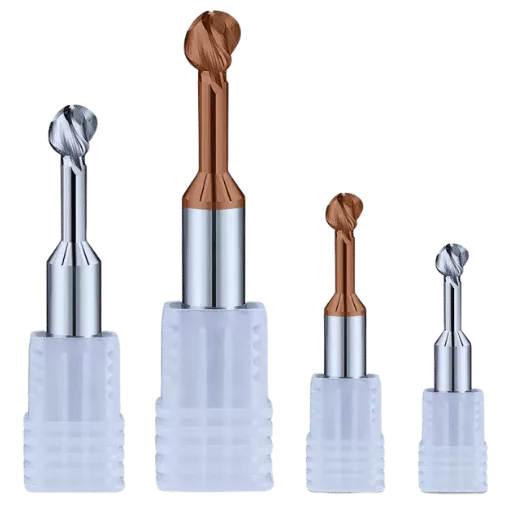
Optimizing end mill geometry for deep slot milling has become a critical engineering focus as modern CNC machining demands tighter tolerances, improved tool longevity, and superior surface integrity. Deep slot applications—whether in aerospace structures, die-and-mold cavities, precision fixturing, or high-strength alloy components—push cutting tools to their mechanical limits. Heat concentration, chip evacuation issues, deflection forces, and vibration are significantly amplified when machining narrow, deep channels. As search algorithms increasingly favor technically rich, user-intent–aligned content, understanding and explaining the full spectrum of end mill geometry considerations is essential for manufacturers, engineers, and CNC programmers seeking performance-driven solutions. From helix optimization and flute design to corner reinforcement and edge preparation, the geometry of an end mill directly determines whether a tool can sustain cutting loads without fracturing, maintain accuracy over extended machining cycles, and produce predictable surface finishes in deep, restrictive environments. When the geometry is optimized correctly, machining efficiency increases dramatically, cycle time drops, and quality consistency improves across both prototyping and high-volume production.
One of the most influential geometry factors in deep slot milling is helix angle design, which directly governs chip flow, cutting pressure distribution, and vibration behavior. High helix angles—typically between 38° and 45°—promote smoother cutting action by drawing chips upward and out of the slot more effectively. This is particularly important in deeper geometries where chips tend to pack tightly, risking recutting, material welding, and sudden tool breakage. However, excessively high helix geometry also increases axial forces, which can pull the tool downward and contribute to chatter or tool deflection in long-reach scenarios. In contrast, a lower helix angle reduces axial load but sacrifices chip evacuation efficiency, making it unsuitable for heavy chip volume removal in deep slots. The optimal solution often lies in variable helix end mills, which stagger cutting vibrations across the flute profile and break harmonic resonance patterns. These tools provide a balanced approach by offering stable cutting, smoother finishes, and reduced chatter—benefits that become magnified in long axial engagements where every fraction of tool stability affects dimensional precision. As industries continue machining more advanced materials such as titanium alloys, powdered steels, and Inconel, helix optimization remains a straightforward yet non-negotiable step toward achieving predictable tool performance.
Flute count and flute geometry represent another core dimension in end mill optimization. For deep slot milling, the most common choice is either two-flute or three-flute configurations, depending on the material being machined and the required surface finish. Two-flute cutters offer the largest flute volume, maximizing chip evacuation and minimizing heat accumulation inside deep channels. This makes them ideal for aluminum alloys and other materials with high chip volume. However, when machining harder materials, additional flute count provides increased cutting edges, which distribute load more evenly and prolong tool life. Three-flute cutters often strike the right balance between chip clearance and edge engagement. They provide smoother wall finishes without compromising evacuation efficiency too severely. Beyond flute count, the flute profile itself plays a decisive role. Deep, polished flutes enhance chip sliding and reduce material adhesion, especially important in sticky metals such as stainless steel and nickel-based alloys. Manufacturers who attempt deep slot machining with insufficient flute spacing quickly face problems like tool jamming, excessive heat, and surface burn marks. Therefore, selecting flute geometry engineered specifically for deep slot operations directly impacts productivity and part quality, ensuring reliability in both finishing and roughing processes.
Corner strength and edge geometry are equally vital in enhancing tool durability under challenging deep slot milling conditions. Sharp cutting edges may initially deliver excellent cutting performance, but they wear quickly under continuous side milling forces, particularly in long axial depths where lateral stress accumulates. To counteract this, micro-honed edges or edge-prepped geometries increase the tool’s resistance to chipping and fracture. Edge honing creates a controlled radius along the cutting edge, preventing micro-cracks that can propagate under heat and vibration. Meanwhile, corner radii or corner chamfers add structural reinforcement at the tool’s most vulnerable point—the corner where the flute meets the outer diameter. Using a corner-radius end mill instead of a sharp-cornered tool significantly reduces stress concentration and helps distribute cutting loads more effectively. This not only extends tool life but also improves surface integrity by reducing burr formation and minimizing the likelihood of tool breakage halfway through a deep cut. In long-slot applications where tool failure can scrap an entire workpiece, investing in reinforced geometry becomes a strategic advantage rather than a mere preference. Edge geometry, therefore, plays a pivotal role in balancing sharpness with durability, ensuring consistent tool engagement from initial entry to final pass.
In addition to tool geometry, optimizing deep slot milling requires the integration of advanced toolpath strategies engineered to reduce stress on the tool while maintaining efficiency. Modern CAM systems provide high-efficiency machining (HEM) patterns, trochoidal milling techniques, and constant engagement paths that significantly enhance tool stability. When combined with optimized end mill geometry, these strategies reduce cutting force spikes, improve cooling along the flute length, and maintain consistent chip load throughout the cut. For example, trochoidal toolpaths generate thin, uniform chips and minimize radial engagement, allowing the tool to cut deeper with less heat. Meanwhile, adaptive clearing strategies maintain steady engagement and reduce tool deflection—important when machining slot depths one to three times tool diameter or deeper. By aligning geometry and toolpath, machinists can push deeper and faster without sacrificing accuracy or tool integrity. This synergy between tool design and software programming is essential in modern CNC machining environments where output speed, material hardness, and tight tolerances must coexist without compromise. As algorithms reward content that educates users holistically rather than in isolated concepts, addressing both geometry and toolpath integration elevates the overall technical relevance of the subject.
Finally, optimizing end mill geometry for deep slot milling extends beyond the tool itself and requires attention to machine conditions, coolant delivery, holder selection, and vibration control. Tool holders with high rigidity—such as hydraulic chucks or shrink-fit holders—ensure minimal runout, which is critical when machining narrow and deep channels where even slight misalignment leads to premature tool wear or dimensional drift. Coolant strategy also affects tool performance, particularly in materials where thermal cycling influences chip behavior. While some materials benefit from flood coolant to wash chips from the slot, others, such as hardened steels or graphite, perform better under air blast or minimum-quantity lubrication to avoid sudden thermal shock. Machine rigidity and spindle power must match the demands of the geometry; deep slot milling in hardened materials often requires machines with superior structural rigidity to suppress vibration. Even the best end mill geometry cannot compensate for an unstable machine environment. Comprehensive optimization—including spindle condition, tool balance, workholding stability, and appropriate cutting forces—creates a fully controlled ecosystem where the end mill performs at peak efficiency. This integrated approach supports repeatability, prevents unpredictable tool failure, and ensures that deep slots meet the tight specifications required in aerospace, mold-making, and automotive applications.