
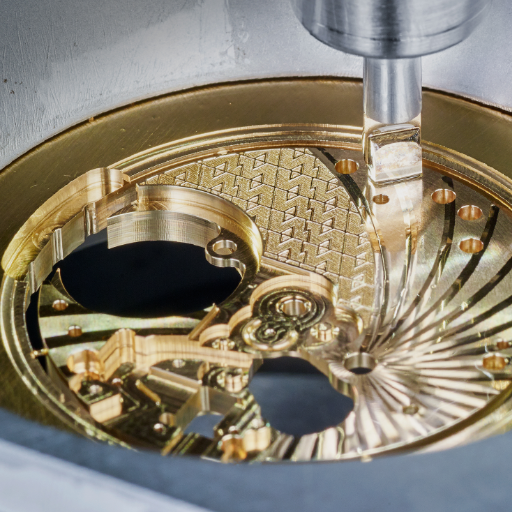
Achieving watchmaking-grade precision is no longer the exclusive domain of century-old ateliers working with hand-tuned lathes. Today, micro-tolerance CNC turning has redefined what manufacturers can accomplish at scale, combining sub-micron accuracy with repeatability that traditional methods simply cannot match. In an industry where a deviation of a few microns can compromise the balance of a movement or the feel of a crown’s rotation, CNC turning provides the consistency needed to meet demanding luxury standards. This shift has positioned micro-manufacturers, OEM suppliers, and high-accuracy machining centers to compete globally by offering reliable tolerances across miniature shafts, screws, pinions, and casing components. Understanding how micro-tolerance CNC turning works—and why its influence is growing—is essential for any company aiming to deliver the next generation of finely engineered components for horology, medical devices, miniaturized robotics, and precision instrumentation.
What separates watchmaking-grade CNC turning from conventional precision machining is not just the tooling or the equipment, but the entire ecosystem of process control. Micro-tolerance machining requires spindle systems that maintain rigid stability at extremely high speeds, cutting tools engineered for minimal tip deflection, and coolant strategies that prevent thermal distortion on parts weighing only a few grams. Even more critical is real-time compensation for environmental variables such as vibration, temperature fluctuations, or microscopic tool wear. Modern CNC turning centers designed for micro-manufacturing integrate adaptive control algorithms that automatically correct deviations in real time, ensuring each part remains within a tolerance window as tight as ±1 micron. These capabilities allow manufacturers to produce miniature threads, chamfers, and concentric diameters on exotic materials such as titanium, cobalt-chrome, and stainless steel—materials increasingly favored by premium watchmakers for their durability and aesthetic refinement. The accuracy achieved through these systems is not merely a bonus; it is the foundation of functional reliability in watch mechanisms where every component must interact with near-zero friction and precise motion synchronization.
Another reason micro-tolerance CNC turning continues to dominate high-end component production is the level of repeatability it introduces into processes previously constrained by manual craftsmanship. In watchmaking, the crown wheel, escape wheel, and balance staff are traditionally the most challenging parts to machine because each feature influences the rhythm, torque, and longevity of the movement. With CNC turning, these features can be produced consistently through automated cycles, allowing manufacturers to scale production without compromising detail. Furthermore, burr-free surfaces and ultra-smooth finishes achieved through precision tooling minimize the need for manual polishing, accelerating throughput while reducing human error. From aerospace-grade miniature fittings to medical micro-screws used in implants, this consistency is a major advantage when compliance, certification, and traceability are required. CNC turning also supports prototype iteration at record speeds, allowing watch brands and micro-manufacturers to refine design geometries, test new alloys, or optimize weight distribution in mechanical components without waiting weeks for revisions.
The integration of high-performance software has become equally influential in the rise of micro-tolerance CNC turning. Advanced CAM platforms now feature specialized toolpath strategies tailored for miniature components, optimizing chip load, cutting angles, and surface contact to achieve stable geometries even at sub-millimeter scales. Digital twins further enhance process reliability by simulating toolpaths and identifying potential collision points or stress concentrations before machining begins. This significantly reduces scrap rates and increases predictability for costly materials such as titanium or invar. Additionally, closed-loop metrology—where measurement systems feed data directly back into the CNC controller—ensures that every micron-level deviation is corrected during machining rather than after inspection. These innovations align with the latest SEO-driven search patterns emphasizing automation, precision engineering, and Industry 4.0 integration, making micro-tolerance CNC turning a topic of high interest for professionals researching ways to elevate manufacturing performance. For SEO purposes, highlighting themes such as accuracy enhancement, process simulation, high-precision tooling, and micro-component engineering aligns well with the latest algorithm updates focused on expertise, authority, and trustworthiness.
Beyond performance, micro-tolerance CNC turning supports design freedom in ways that traditional machining cannot. Watchmakers, for example, increasingly experiment with multi-material assemblies, skeletonized movements, and ultra-thin profiles that demand extreme accuracy to maintain mechanical integrity. CNC turning allows designers to push these boundaries by offering tolerances tight enough to support press fits, friction joints, and micro-assemblies without compromising structural strength. Complex geometries such as stepped shafts, miniature gear profiles, recessed bores, and ultra-fine threads can be cut with unmatched clarity, enabling engineers to conceptualize mechanisms that were once considered too intricate to produce reliably. This design latitude also helps premium brands differentiate their products through unique innovations—whether by reducing the thickness of a movement or incorporating new materials that enhance durability and wear resistance. As consumer interest in craftsmanship meets technological capability, CNC turning offers a bridge between artistic tradition and advanced engineering, delivering the quality that modern watch buyers expect.
For manufacturers aiming to compete in industries demanding watchmaking-grade precision, investing in micro-tolerance CNC turning is no longer optional—it is a strategic necessity. As global markets evolve toward compact, durable, lightweight, and highly engineered components, the ability to deliver consistent micro-scale accuracy will determine which companies stay ahead. The synergy between optimized machining technology, adaptive control, high-performance tooling, and advanced metrology creates a framework that elevates both quality and productivity. Whether producing balance staffs for luxury timepieces, micro-screws for medical devices, or precision pins for optical instruments, micro-tolerance CNC turning ensures each part functions flawlessly in its final assembly. With demand for miniaturized components rising across sectors, organizations that adopt these capabilities are positioned to lead in innovation, reliability, and long-term value creation.