
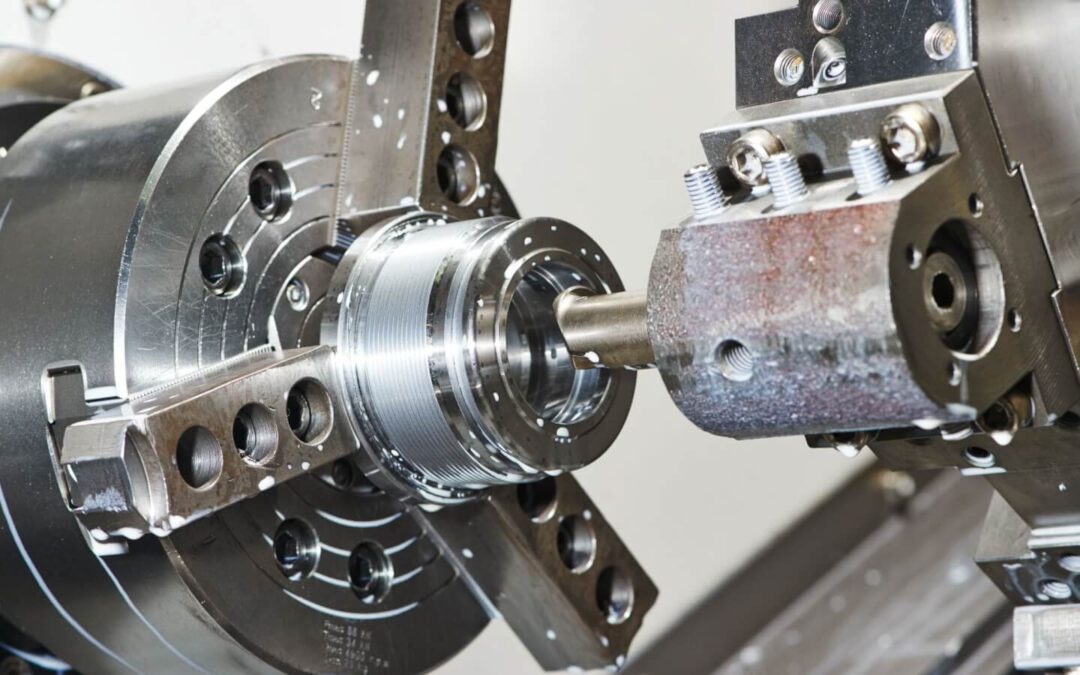
Ultra-precision CNC boring has become a mission-critical manufacturing process in the aerospace industry, particularly for the production of bearing housings that demand extreme dimensional accuracy, surface integrity, and long-term reliability under intense operational loads. Aerospace bearing housings function as the structural foundation for rotating assemblies in jet engines, landing gear systems, and flight control mechanisms, where even micron-level deviations can compromise safety, efficiency, and lifespan. As aircraft systems evolve toward lighter materials, tighter tolerances, and higher rotational speeds, the demand for ultra-precision CNC boring techniques continues to grow. Modern aerospace manufacturers no longer rely solely on conventional machining approaches; instead, they leverage multi-axis CNC platforms, adaptive control systems, and real-time metrology feedback to achieve bore roundness, straightness, and surface finish values that were impossible a decade ago. The integration of thermal compensation algorithms, vibration-damping machine structures, and ultra-rigid spindle systems enables manufacturers to maintain bore accuracy even during extended production cycles. These advancements not only improve part quality but also dramatically reduce scrap rates and rework costs, making ultra-precision CNC boring a cornerstone of both performance engineering and commercial scalability in aerospace manufacturing.
The material complexity involved in aerospace bearing housings adds another layer of challenge that directly influences the machining strategy. Titanium alloys, Inconel, stainless steel, and advanced aluminum-lithium composites each possess distinct mechanical and thermal behaviors that demand specialized cutting parameters and tooling systems. Ultra-precision CNC boring techniques rely heavily on optimized tool geometries, advanced coatings such as diamond-like carbon and nano-layer PVD films, and controlled chip evacuation systems to manage heat generation and prevent material deformation during cutting. Even minute thermal fluctuations can trigger micro-expansion that disrupts bore concentricity, so aerospace machining environments increasingly operate under climate-controlled conditions with machine enclosures that stabilize temperature and humidity. Additionally, cutting forces must be carefully balanced to prevent chatter, which can destroy surface integrity and introduce invisible structural weaknesses. By combining finite element modeling, tool path simulation, and real-time spindle load monitoring, manufacturers can predict and correct these issues before they manifest on the workpiece. This deep integration between digital engineering and physical machining defines the modern state of ultra-precision CNC boring for aerospace bearing housings.
Metrology and quality assurance now play an equally vital role in sustaining ultra-precision outcomes across production runs. Traditional post-machining inspection methods have been replaced or enhanced by in-process probing systems, laser measurement technologies, and non-contact optical scanning that deliver immediate dimensional feedback to CNC controllers. This closed-loop manufacturing structure allows dynamic tool offset corrections during boring cycles, maintaining bore diameter tolerances often held within two to five microns across multiple stations. Aerospace bearing housings must meet not only geometric accuracy but also strict surface roughness requirements, often below Ra 0.2 microns, to ensure optimal lubrication performance and long-term fatigue resistance. Achieving these values requires refined feed rate modulation, controlled tool engagement angles, and vibration-minimized cutting sequences. Furthermore, every housing is subjected to traceable inspection documentation in compliance with AS9100, NADCAP, and OEM-specific aerospace certification standards. The combination of ultra-precision CNC boring with digitally integrated metrology ensures not only compliance but also repeatability at the scale required for modern aerospace production programs.
Process stability is another defining pillar in successful ultra-precision CNC boring operations for aerospace bearing housings. Long production cycles, often exceeding several hours per part, demand exceptional thermal equilibrium across machine components, fixturing systems, and tooling interfaces. Even microscopic misalignment within fixturing can cause axial deflection that propagates along the bore, leading to taper errors or ovality. As a result, aerospace manufacturers deploy hydraulic expansion mandrels, zero-point clamping systems, and air-bearing rotary tables that maintain alignment accuracy under dynamic loads. Tool life management strategies also play a decisive role, as ultra-fine tolerances cannot tolerate progressive edge wear. Predictive analytics driven by spindle power trends and acoustic emission sensors allow tools to be replaced before they compromise bore integrity. Coolant delivery further influences process stability, with high-pressure through-spindle systems ensuring consistent thermal dissipation and chip evacuation deep within blind or extended-reservoir bores. When combined, these stability mechanisms transform CNC boring from a machining operation into a fully controlled aerospace-grade production ecosystem.
Looking forward, the future of ultra-precision CNC boring for aerospace bearing housings is being shaped by artificial intelligence, digital twin simulation, and hybrid manufacturing systems that merge subtractive and additive processes within a single production workflow. AI-driven adaptive machining platforms are beginning to analyze historical tooling performance, material behavior, and environmental data to self-optimize boring parameters in real time. Digital twins allow engineers to simulate bore formation at the microstructural level before any material is cut, drastically reducing development cycles for new aircraft platforms. Additive manufacturing is also being used to near-net-shape complex bearing housing geometries, with ultra-precision CNC boring serving as the final accuracy-defining stage. This convergence of smart manufacturing, materials science, and ultra-precision machining ensures that aerospace bearing housings will continue to meet increasingly demanding performance thresholds. As global air traffic expands, electric propulsion systems emerge, and hypersonic platforms advance, ultra-precision CNC boring will remain one of the most essential manufacturing technologies enabling the next generation of safe, efficient, and high-performance aerospace systems.